Guides
Barbershop equipment checklist: what to keep and what to drop
Barbershop equipment earns its bench space through steady client use, so track clipper, chair, and sterilizer frequency each quarter and drop whatever sits idle.
What to take away
- Judge each item on the barbershop equipment checklist by cuts per week, not by what it cost. A Wahl Senior that runs four chairs a day outranks a spare that runs one.
- Keep a corded clipper as the fallback for every cordless one. An Andis Master or an Oster Classic 76 fills that slot. A dead battery mid-fade is a refund, not a delay.
- Drop any tool you cannot clean to the contact time its disinfectant label states. If the housing traps hair, it fails that test.
- Price the replacement before the repair. When a repair quote passes half the new-unit price, the unit is already gone.
- Write the disposal date on every sharps container when you seal it, not when you remember.
This article covers shop operations, not licensing, sanitation or product-safety rules, which differ by province, state and municipality. Confirm current requirements with your provincial or state board and your local health authority before you change equipment or procedure.
Keep: chairs, corded clippers, trimmers, razors, disinfectant and lamps
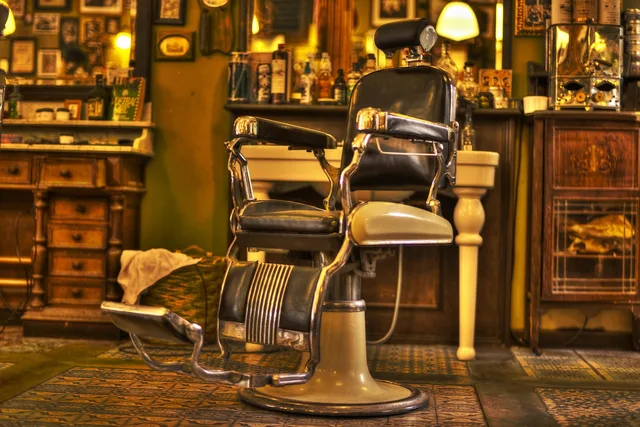
Barber chair. Keep chairs with a working hydraulic pump, a stable base and a headrest you can wipe down between clients. Takara Belmont, Kaemark and Pibbs build chairs with rebuildable pumps and stock replacement parts. New recline models typically list between $1,200 and $4,000; used units in most markets run $400 to $1,200.
A chair that sinks under a heavy client or wobbles on its base is a fall risk and a complaint waiting to happen. Check the manufacturer's plate for weight rating, recline and footrest against how your clients actually sit.
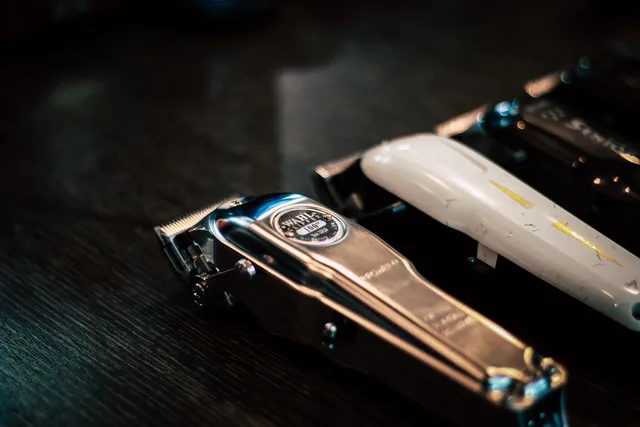
Corded clipper. Keep one per station as the fallback. Cordless clippers cut faster and tire a barber's wrist less, but a battery that dies mid-fade costs you the rest of that client's trust.
The Andis Master (adjustable blade, list around $150 to $190), the Oster Classic 76 (detachable blades, $140 to $190) and the Wahl Professional 5-Star Senior ($110 to $140) all run on shop current. The corded unit is the insurance policy.
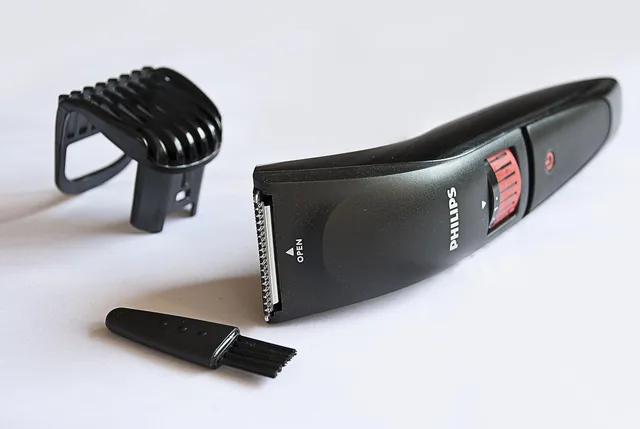
Trimmer with a replaceable blade. Keep trimmers whose blades you can swap in under two minutes. The Wahl Detailer, the Andis Slimline Pro Li and the BaBylissPRO FX take replacement blades that cost roughly $20 to $40. A trimmer with a sealed head goes out of service the day the blade dulls, and that is a lost line-up, not a lost tool.
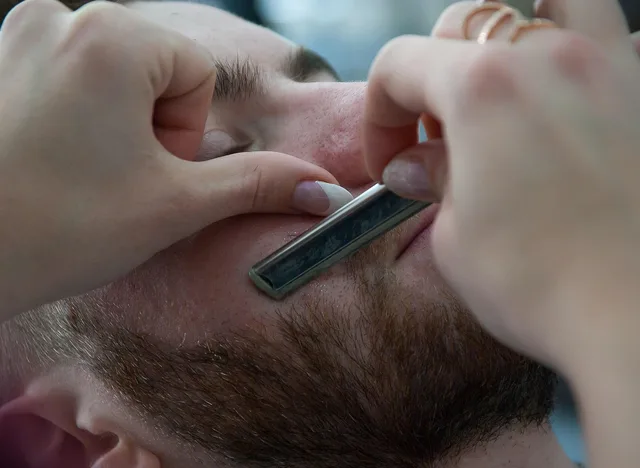
Straight razor with disposable blades. Keep the handle, drop nothing here. The Feather Artist Club SS (about $80 to $120) and the Parker SR1 (about $20 to $30) both take standard disposable blades, so the edge is always new. Blade disposal is the whole game: a sealed sharps container at each station, emptied on a schedule you can point to.
Spray bottle and labeled disinfectant. Keep one bottle per station, mixed to the dilution and contact time on the label. Barbicide's label lists a 10 minute immersion for hard, nonporous implements; check the current bottle, because formulas change. CaviCide wipes cover surfaces and clamp handles. A bottle of mystery blue liquid tells an inspector nothing.
Task lamp at each station. Keep lighting you can aim at the cutting line. An OttLite, a Luxo L-1 or a Dazor desk lamp typically costs $60 to $250 and clamps to the station. Overhead fixtures light the room; they do not light the fade.
Drop: the idle chair, dead-blade clippers, unvalidated autoclaves, cracked dryers and offline terminals
The spare chair nobody sits in. Drop it, or move it to a second station that books. A spare Takara Belmont still carries depreciation, floor space and cleaning time, and it signals to clients that the shop is half full.
The clipper with a discontinued blade. Drop it once the last blade in your drawer is gone. Wahl keeps its 5-Star Series blades in the catalog across several body generations, and Andis still stocks Master blades. A body outside those parts lines turns into shelf weight, because parts you cannot reorder end the tool's life.
The autoclave you never validated. Drop it from service and follow the manufacturer's and your regulator's guidance on sterilization. A cassette unit such as the SciCan Statim 2000 typically runs $5,000 to $8,000 new; a chamber model like the Tuttnauer 2540M runs $3,000 to $5,000. Do not improvise a cycle. If you cannot document the cycle, you cannot defend it.
The dryer with a cracked housing. Drop it. A cracked housing traps hair and moisture, and no wipe-down reaches inside it. A hood dryer such as the Pibbs 514 lists around $250 to $400, which is cheaper than a failed inspection.
The point-of-sale terminal that only works online. Drop it if your shop loses connectivity during storms or sits in a mall with flaky service. Ask what a card sale does when the internet drops. Square documents an offline mode with a limit per transaction; a terminal that stops at the login screen pushes cash into an unlogged drawer. That is the audit finding nobody wants.
Worked example: the repair-or-replace line
A clipper repair quote has to be weighed against the replacement price, not against what you paid two years ago.
- New unit price
N- Repair quote
R- Weeks the repaired unit is expected to last
W- Weeks a new unit is expected to last
W2
If R is more than half of N, and W is less than half of W2, replace. If R is small and W is close to W2, repair and put the difference into a spare blade.
A $130 Wahl Senior with a $90 quote on a two-year-old body is a replace; a $30 blade swap is not. Substitute your own figures; there is no universal threshold.
Checks before you commit
The U.S. Bureau of Labor Statistics: Barbers, Hairstylists, and Cosmetologists describes barber duties, work settings, tools and licensing. Barbers clean and disinfect tools and work areas. Use it to sanity-check what a working barber actually handles in a shift.
The Occupational Safety and Health Administration: Bloodborne Pathogens Standard in a Barber Shop explains employer duties. A shop employer must determine whether employees have reasonably anticipated occupational exposure. That exposure is to blood or other potentially infectious material. The employer must apply the standard when it is triggered. Your equivalent authority in Canada is the provincial labor ministry.
The U.S. Food and Drug Administration: Salon Professionals: Fact Sheet covers cosmetic-product safety and reporting, and separates that role from workplace safety and state licensing. Read it before you assume a product claim is regulated.
For the setup side, the barbershop equipment and setup guide walks through station layout and installation.
Common questions
How often should I review the keep-or-drop list?
Once a quarter, against your booking data. Pull the cuts per week for each station and each tool, and anything that has not run in a full quarter goes on the drop list. Booking systems such as Booksy and Square Appointments report service counts by staff member. That cadence catches the idle chair before it becomes a habit.
What do I do with dropped equipment?
Sell what still has a market, and record the sale. Scrap or recycle what does not, and remove it from your depreciation schedule the same month. Leaving dead equipment on the books overstates your assets and understates your floor space.
Does a cheaper tool ever beat a named brand?
Sometimes, if the blades are replaceable and the parts are reorderable. Availability decides it: can you get a blade in under a week? Wahl and Andis blades are the ones most shops restock within days. A cheap clipper with a stocked parts line beats an expensive one with a six-week wait.