Guides
First equipment for a barbershop for 2027
Opening a barbershop in 2027 starts with matching each piece of equipment to the services you actually sell and the rules your province or state sets.
What to take away
- A chair is a hydraulic machine with a warranty and a parts supply, not upholstery. Rated capacity, recline range and cleaning access decide whether it survives five years.
- Clipper batteries, blade sets and charger compatibility are a system. Mixing brands mid-shop costs you a second charger fleet and a second set of spare blades.
- Sharps and disinfection follow your state or provincial board, not a supplier leaflet. Contact time and dilution come off the product label.
- Write the equipment register the week you buy, not at year-end inventory. Serial numbers, warranty dates and assigned user are the record that survives staff turnover.
This article covers shop operations and purchasing. It is not licensing, infection-control, employment or tax advice. Requirements differ by province, state and municipality, and they change, so confirm current rules with your board and your accountant before you commit money.
2027 in the title is a planning horizon, not a rule change. Nothing here is specific to 2027 except the prices. What moves is local. State boards and provincial health authorities adopt their own sharps, sanitation and electrical rules on their own schedules.
Start from the service menu, not the catalogue
Write your menu first. A shop selling skin fades and beard trims needs different iron than one selling hot-towel shaves and colour.
Equipment by service
- Hot-towel shavefull-recline shave chair
- Hot-towel shavelather warmer
- Hot-towel shavestropping setup
- Hot-towel shavetowel steamer
- Colourmixing station
- Colourtimer
- Coloursink within reach
The barbershop services and packages guide works through what each accepted service asks of the shop, including the ones owners add in year two and regret.
Then price the gap. Equipment you cannot fill with booked services is rent you pay on a shelf.
First equipment list and what it costs
Quantities are per chair. Prices are typical 2027 US retail ranges, not quotes.
| Item | Per chair | Typical US price |
|---|---|---|
| Hydraulic barber chair, rated load 250 lb or more | 1 | $500 to $2,500 |
| Cordless clipper, corded fallback and trimmer | 1 each | $220 to $700 the set |
| Spare battery for each cordless tool | 1 to 2 | $30 to $70 each |
| Blade sets and guards for the chosen system | 2 | $25 to $60 each |
| Straight razor or blade holder | 2 | $20 to $120 |
| Disposable blades | 100 count | $10 to $30 |
| Rigid, puncture-resistant sharps container | 1 | $10 to $40 |
| Disinfectant that meets your board's label rule | 2 bottles | $15 to $40 each |
| Clean tool tray and used tool tray | 2 | $15 to $60 each |
| Station mirror, mat and trolley | 1 set | $200 to $800 |
| Capes and towels | 6 to 12 | $3 to $40 each |
That is about $1,250 to $5,000 per chair of tools and station hardware, with a mid-range build near $2,500. Rent, buildout, electrical work and licensing fees sit outside this list.
Chairs: rated load, recline and parts supply
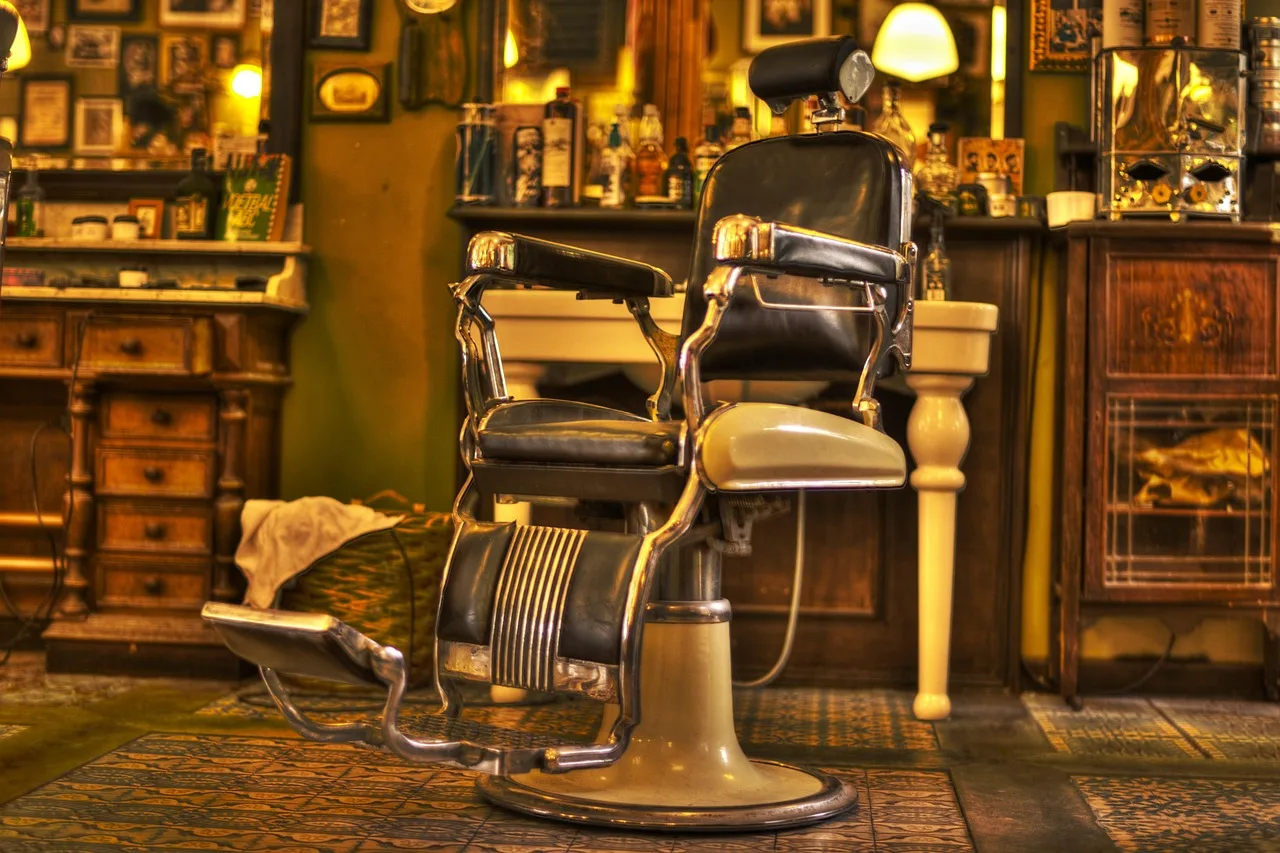
A barber chair is rated by working load, not by looks. Check the hydraulic stroke, the recline range and whether the footrest and headrest adjust independently.
Walk around the chair. Can you reach the base with a vacuum and a cloth? Chairs that fail inspection usually fail on cleaning access, not on the pump.
Ask for the parts list and a warranty in writing. A pump that takes six weeks to arrive is a dead station for six weeks, and a dead station is a lost column of bookings.
Used chairs are a real market, and the new versus used equipment cost guide weighs price against warranty and parts supply.
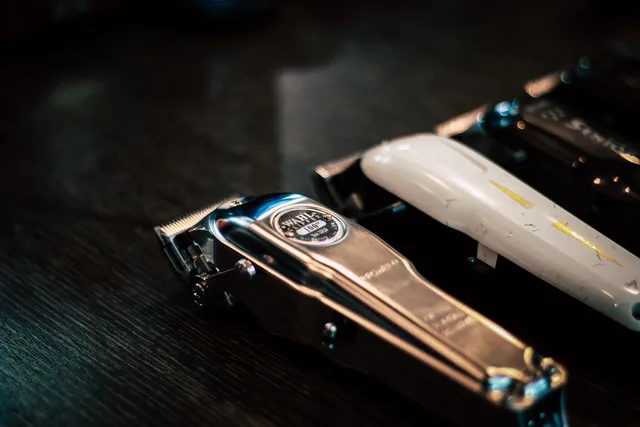
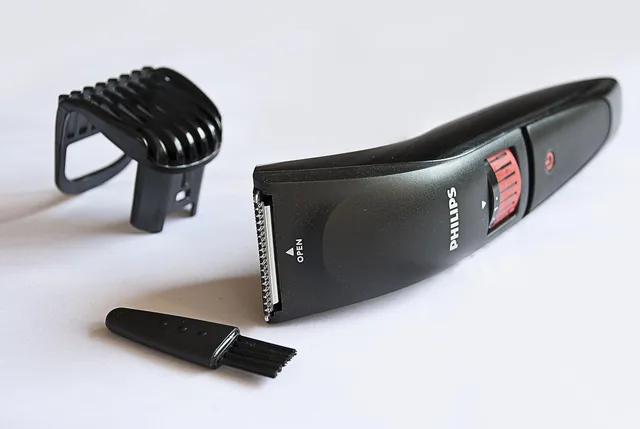
Clippers, trimmers and the battery fleet
Standardize on one battery platform if you can. Two brands means two charger racks, two spare-battery drawers and two sets of blade guards.
Compare motor type, blade system, guard range and corded fallback. Corded fallback matters more than run time on a Saturday, because a dead battery mid-fade is a client sitting in a cape.
Heat is the failure mode nobody writes down. Track heat complaints the same way you track tool downtime, and rotate tools between barbers before a motor cooks.
Every barber has a preference, and that preference is worth something. A tool a barber will not pick up is a tool you bought twice.
Razors, blades and sharps
Straight razors, blade holders and disposable blades fall under your board's rules on sharps handling and disposal. Read the current version rather than the version a supplier quotes you.
The licensing and compliance guide explains where each authority publishes its requirements.
Two examples of how far apart the rules sit.
In California, the Board of Barbering and Cosmetology writes the tool disinfection rules, so the disinfectant on your shelf is a state decision. In Ontario, personal service settings fall under Ontario Regulation 136/18, which requires written infection control procedures and a clean then disinfect routine for reusable tools.
The label follows the border. US disinfectants carry an EPA registration number, and Canadian ones carry a Health Canada drug identification number.
Blade changes belong in a written procedure with a named owner. When blade changes become a personal habit, disposal containers fill unevenly and nobody can say when the last change happened.
Sharps containers go where the work happens, not in a back room. A container across the shop is a container that gets skipped during a rush.
Sanitation, storage and the clean-used split
Pre-clean, disinfect at the label's dilution and contact time, then store covered. Contact time is not a suggestion, and a spray-and-wipe is not a soak.
Keep clean and used tools physically separated. Two trays, two drawers, two colours. When clean and used tools share a drawer, the drawer is the contamination path.
Linens, waste and spill response need their own written steps. The barbershop operations and workflow guide covers where those steps sit in the day.
The FDA's salon professionals fact sheet covers cosmetic-product safety and reporting, and separates that from workplace safety and state licensing.
Worked example: a two-chair shop adding hot-towel shaves
A two-chair shop wants to add hot-towel shaves at 30 minutes, three slots a day, five days a week.
That is 15 shave slots a week. At a typical ticket of $40, the added revenue is $600 a week, or about $31,200 a year.
The shave line needs a chair that reclines flat: $1,200 to $2,500. A lather warmer: $60 to $150. A towel steamer: $150 to $400. A stropping setup: $100 to $250. A second towel set: $150 to $300.
Typical total is $1,700 to $3,600, with a mid-range build near $2,600.
Barber time is the bigger cost. A 30-minute shave is about 0.75 hour once setup and cleanup are counted, so 15 shaves is 11.25 hours a week.
At a loaded barber cost of $25 an hour, inside a typical range of $18 to $35, that is $281 a week, or $14,625 a year.
The line returns $31,200 minus $14,625 of labour and $700 of lather, blades and towels, about $15,875 a year before rent and overhead.
Against $2,600 of equipment, that margin pays the purchase back in about two months.
If the slots displace $30 cuts, the extra is $10 a slot, $150 a week and $7,800 a year, so payback stretches to about four months.
The equipment checklist for new owners is the shortest form of this list to keep current.
The equipment register and repair-or-replace line
Open a register the day equipment arrives. Record the serial number, purchase date, warranty end, assigned user and repair history.
Review downtime and repeat repairs monthly. Two repairs on the same unit inside a year is a signal, not bad luck.
Decide the replace line in advance using safety, reliability, parts availability, downtime and repair cost against the price of a replacement. Shops keep unreliable equipment because it is paid for, and that reasoning costs more in lost bookings than the replacement would.
What each authority decides about your equipment
The BLS occupational outlook for barbers, hairstylists and cosmetologists covers several topics: duties, work settings, tools, licensing and training. It notes that barbers clean and disinfect tools and work areas. Treat it as the source for the tool allowance you hand a new barber.
OSHA's bloodborne pathogens interpretation for barber shops sets out that an employer must determine whether employees have reasonably anticipated occupational exposure. If they do, the standard applies. That finding is what puts a sharps container, gloves and an exposure control plan on the order.
OSHA's safety management guidance recommends finding and fixing hazards before an injury or an inspection does it for you. On the floor, it decides where the steamer sits, how cords are routed and where chemicals are stored.
None of these replace your board, your fire marshal or your electrician. Name the authority, then call them.
Common questions
Do I need a full shave chair or will a standard chair do?
A standard chair with limited recline will not hold a client flat for a hot-towel shave, and the barber ends up bent over the client. If shaves are on the menu, buy the recline. If they are not, do not pay for it.
How many clippers does one chair need?
Enough that a dead battery never stops a cut. Most shops run one cordless clipper, one corded fallback and one trimmer per barber, plus a spare battery per cordless tool. Two barbers sharing one charger is the bottleneck.
When should I replace rather than repair?
When the repair cost approaches the replacement price, when parts lead times stretch past a week, or when the unit has failed twice in a year. Write the line down before you need it, because the decision is harder when the chair is in front of you.
Does any of this change by province or state?
Yes, and it changes often. Licensing, sharps disposal, sanitation products and electrical requirements are set locally. Confirm with your provincial or state board and your municipal authority, and get professional advice for your jurisdiction.