Guides
What it costs to start a barbershop, and where the money comes from
Barbershop startup costs run from a few thousand dollars for a chair and tools to six figures for a full buildout, and the money comes from named lenders.
What to take away
- Starting a barbershop with one chair and a set of tools can come in under $5,000. A leased storefront with plumbing, ventilation and three stations usually lands between $60,000 and $150,000.
- Buildout, permits and working capital are the lines that break budgets, not the chairs.
- Named routesSBA 7(a) up to $5 million, SBA Microloans up to $50,000, Kiva US up to $15,000 at 0%, equipment financing, and a prime-linked line of credit.
- The shop repays any of it out of the chair hour, so price the hour before you sign a lease.
- Confirm licensing and sanitation requirements with your state board before you commit to a space.
What the money actually buys
Start with the chair hour, not the buildout. A barber cutting three clients an hour at $35 grosses $105 an hour before product, rent and payroll. That number decides how much debt the shop can carry.
Two shapes of startup exist. The first is a booth renter or a single chair inside an existing shop. The kit is a chair, clippers, shears, a cape and sterilization supplies. Add a license and a deposit. That runs $3,000 to $8,000 in most U.S. markets.
Wahl Senior and Andis Master clippers list near $130 to $180 each, and Oster Fast Feed models start around $60. A working pair of shears costs $150 to $600.
The second shape is a leased storefront with its own plumbing, ventilation and signage. Here the buildout dominates, and it is the line owners underestimate most.
| Line item | Typical range | Notes |
|---|---|---|
| Lease deposit and first month | $3,000 to $12,000 | Mall and high-traffic locations sit at the top |
| Buildout: plumbing, electrical, ventilation | $25,000 to $70,000 | Grease traps, floor drains and exhaust drive this |
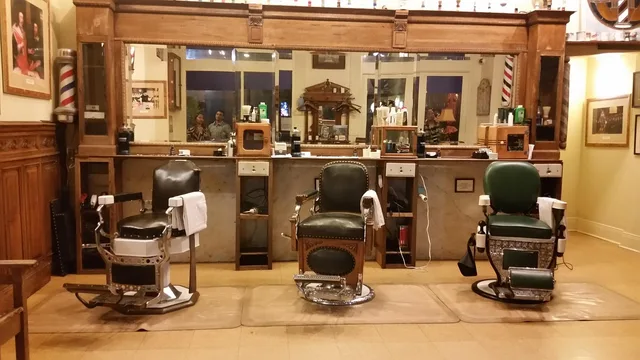
| Chairs and stations (Takara Belmont, Collins) | $1,200 to $4,000 each new | Used chairs run $200 to $800 but must pass inspection |
| Hand tools and clippers | $800 to $2,500 per barber | Shears and clippers are the bulk |
| Sterilizer and sanitation equipment | $300 to $1,200 | Jars, sprays and UV cabinets sit at the low end |
| Opening product inventory | $1,500 to $5,000 | Shampoo, tonics, retail stock |
| Booking and POS software (Square Appointments, Booksy) | $0 to $300 per month | Square's Plus plan is $29 per location; Booksy's starter tier runs about $30 |
| Exterior signage | $1,500 to $6,000 | Sign permits add time to the buildout |
| Permits, license, insurance | $1,000 to $4,000 | Varies by state and municipality |
| Working capital | $10,000 to $30,000 | Three months of rent and payroll |
Those ranges are illustrative. Your own figures come from quotes you collect, not from this table.
Where the money comes from
SBA 7(a) loans. The workhorse for a first storefront, capped at $5 million. The SBA guarantees 85% of loans up to $150,000 and 75% above that. Most borrowers put in about 10% equity.
Rates on variable 7(a) loans above $50,000 are capped at prime plus 2.25% to 2.75%. Terms run to 10 years for equipment and working capital, and up to 25 years for real estate.
The program sits under the SBA business guide, which lists eligibility and lender requirements. Expect a personal guarantee and a business plan.
SBA Microloans and nonprofit lenders. Microloans top out at $50,000 and average roughly $13,000, with terms to six years. Intermediaries include Accion Opportunity Fund, Community Development Financial Institutions and local economic development groups. Rates typically land between 8% and 13%.
Kiva US. Crowdfunded loans up to $15,000 with no interest and no fees, repaid over up to three years. Suited to one chair, a starter tool kit or a lease deposit.
Equipment financing. Lenders secured against chairs, stations and clippers fund the equipment portion without touching the buildout. Rates typically run 7% to 20% over two to five years, and the equipment itself is the collateral. Balboa Capital and Crest Capital both write these small tickets.
A personal line of credit or home equity line. Common for the gap between what a lender funds and what the buildout costs. Rates track prime and typically land near 7% to 10% as of 2026. It is also the fastest way to put a house at risk, so size it against the chair hour, not against optimism.
Rollover for Business Startups (ROBS). A structure that moves retirement funds into the business without an early withdrawal penalty. Providers such as Guidant Financial and Benetrends typically charge $3,000 to $5,000 to set one up, plus annual administration. It is complex, it needs a tax professional, and it is not a decision to make alone.
Supplier terms and landlord contributions. Some product distributors extend net-30 terms to new accounts. Some landlords fund part of a tenant buildout in exchange for a longer lease. Both are worth asking for before you borrow.
Family and partner capital. The most common source and the one that ends relationships. Put the terms in writing with the same rigor a bank would.
The paperwork that gates the money
No lender funds a shop without a license path. Barber licensing, sanitation rules and inspection intervals are set by your state board, and they differ by state and change over time. Confirm the current requirements with your state board before you sign anything.
The barbershop licensing and compliance guide covers what the board asks for and when renewals fall due. A lapsed license stalls a buildout faster than a slow contractor.
On the tax side, the IRS starting a business page walks through structure, tax ID and recordkeeping. Set up the recordkeeping before the first client, not after the first audit.
For staffing, the BLS occupational outlook for barbers, hairstylists and cosmetologists gives current pay, self-employment rates and geographic data. Use it to sanity-check what you plan to pay, then confirm against local postings.
Opening without burning the working capital
Open with two chairs and five days a week. Test booking, walk-ins, consultation, and service timing before you promote. Test sanitation, payments, tips, and rebooking before you promote. Test closing before you promote.
The barbershop SOP checklist for daily operations is the list a soft opening is checking. Write down the expected result and the earliest sign of failure for each item.
A no-show in a fully booked Saturday afternoon costs more than a slow Tuesday. Track no-show percentage and rebooking rate weekly from week one.
Worked example: three chairs in a leased unit
Assume a 900 square foot unit at $22 per square foot, so $1,650 a month in base rent. Three chairs, each producing 20 cuts a day at $35, five days a week, gives $10,500 a week gross.
Payroll at 45% of revenue, rent and utilities at 18%, product at 6%, and software, insurance and permits at 4% leaves roughly 27% before debt service. On $10,500 a week that is about $2,835.
A $70,000 loan at 9% over seven years costs about $1,130 a month. The shop covers it, but only if the chairs stay filled. Read the barbershop profit margins and break-even points breakdown before you borrow against that assumption.
Common questions
How much cash do I need before opening day?
Plan on three months of rent, payroll and insurance in the bank on top of the buildout. Lenders want to see it, and a slow first quarter is normal.
Can I start with one chair and no lease?
Yes. Renting a chair in an established shop needs a license, tools and a deposit, often under $5,000. It is the cheapest way to test whether the trade suits you.
Do I need a business plan to get funded?
Most SBA lenders want one. It needs the chair hour arithmetic, the buildout quotes and a realistic first-year revenue line, not a market overview.
What kills a barbershop in year one?
Underestimating the buildout, signing a lease the chair hour cannot cover, and spending working capital on fixtures. The barbershop startup and market guide covers the sequence. Compare catchments using markets for barbershop owners before you commit to a location.